
In short. CNS Logistics moved a couple's estate on Montreal's South Shore, along with a second property on the North Shore, while the two were in the midst of a divorce. One household relocated to Westmount; the other's belongings went into CNS storage and, about six months later, to a new home on the North Shore. Securing a moving date took more than six months of negotiation between the parties and their lawyers. Because a no-contact order was in effect, police officers were present while the South Shore estate was loaded. A crew of four movers with three trucks worked each location, on separate days, and every item arrived undamaged.
The couple asked that their names be withheld and agreed to let us share their story.
At a glance
| From | An estate on Montreal's South Shore and a second property on the North Shore, moved on separate days |
| To | One household to Westmount; the other to CNS storage, then to a new home on the North Shore |
| Crew | Four movers and three trucks at each location |
| Clients | A divorcing couple, each represented by a lawyer |
| Time to book | More than six months |
| Packing | About two and a half days |
| Moving | About two and a half days |
| Unpacking | One full day, for one of the two households |
| Storage | About six months, before delivery to the North Shore |
| Trucks | 22-foot cube trucks, as required by the contract, which meant many more trucks than the job would otherwise have needed |
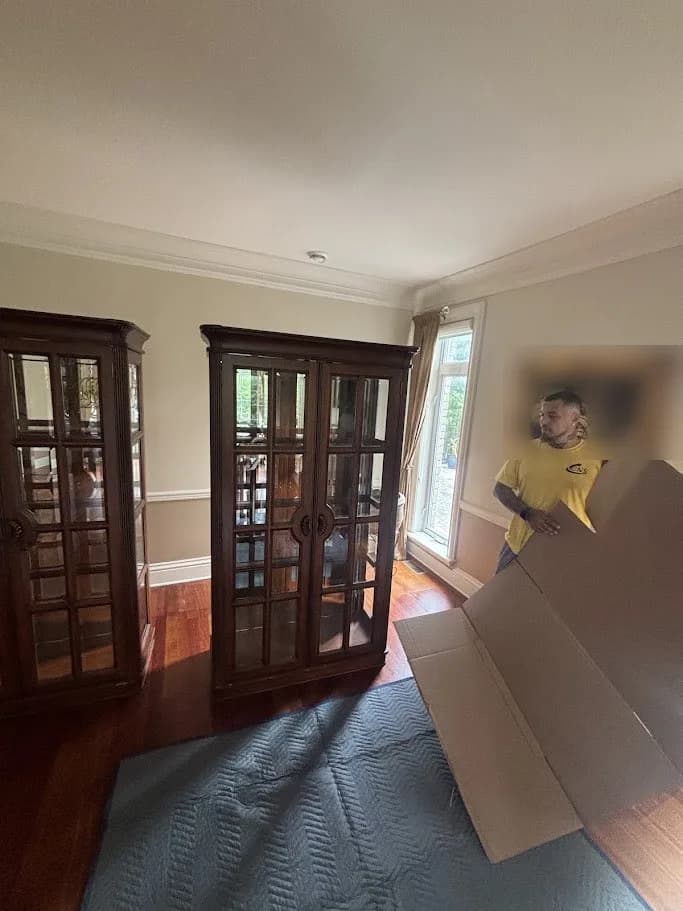
| Notable pieces | An art collection valued at about $300,000 (most valuable piece declared at $25,000); a marble table; a pool table; a foosball table; trampolines; a baby grand piano |
| Conditions | A no-contact order; police present during loading at the South Shore estate; set times for packing each person's belongings; no truck longer than 22 feet on the property |
| Project manager | Santiago, CNS Logistics |
| Result | Everything delivered without damage |
What made this move so demanding?
This move was demanding because every decision required the agreement of two people who could not communicate with each other, and of their two lawyers. The physical work alone was substantial: a full estate, a second property, two moving days and a number of heavy, fragile pieces. The legal framework around it turned a difficult move into a far more complex one.
A typical residential move has one client, who sets the date, decides where each piece belongs and calls us if plans change. Here there were two clients, each represented by a lawyer, after months, and possibly years, of legal proceedings. Those proceedings determined who could be in the house, at what times, and which belongings could leave with whom. Our role was to work within those terms exactly as written, from the first box packed to the final delivery.
The inventory demanded real skill on its own: a marble table, a pool table, a foosball table, trampolines and a baby grand piano, as well as an art collection valued at about $300,000, its most valuable piece declared at $25,000. Throughout, the crew worked under the close attention of two people with very different stakes in every item.
Why did it take more than six months to book?
Booking took more than six months because the parties repeatedly renegotiated the dates, the division of the most valuable pieces and the conditions of the move itself, and each change had to be approved by both sides before we could plan around it.
Dates. Moving dates were set, postponed and reset many times. On four separate occasions, we reserved at least four crews for the proposed dates; each time the dates changed, and the crews had to be released and booked again.
Art. The two parties disagreed over who would keep the most valuable works. A decision appeared to be reached, then one party reversed it and the dispute resumed. Each reversal sent the planning back to the beginning, because a piece cannot be packed until it is clear whose truck it belongs on.
Trucks. One party was concerned about items outside the house and asked for a contractual limit on vehicle size. The final contract barred CNS from bringing any truck longer than 22 feet onto the property. Our fleet includes 32-foot trucks (our trucks), which would have suited a job of this size. Instead, everything left in 22-foot cube trucks, which required many more trucks, more loads and more coordination. We accepted the clause because it was a term both sides could agree to, and planned accordingly: each location was assigned four movers and three trucks.
By the time it was signed, our contract read less like a moving order than like part of the settlement. That is the nature of a contested move: the mover is not a party to the dispute, yet its schedule, crews and trucks become part of what the lawyers negotiate.
Why were police officers present during loading?
A no-contact order was in effect between the two parties, yet each was entitled to be present while the other's belongings were loaded. Because they could not agree on the arrangements, police officers attended the loading at the South Shore estate, where the piano was. They were not present during packing.
We did not ask which party the order concerned. It had no bearing on our work and would not have changed how we carried it out. What mattered was that both people had the right to be there, that they could not speak to each other, and that every item placed on a truck had to be the correct item, bound for the correct person.
In that setting, a crew cannot hesitate, debate or improvise. Each mover must know precisely what they are permitted to handle and proceed calmly, piece by piece, under observation.
Despite the circumstances, both clients treated our crew with courtesy throughout, and we are grateful for it.
What does it mean to work strictly to the written agreement?
Working strictly to the written agreement means the crew handled what the written conditions allowed, at the times they allowed it, and nothing more, so that at every moment it was clear whose belongings were being moved and where they were going.
The conditions specified when her belongings could be packed, when his could be, and from what point we were to record what each of them was taking. On an ordinary move, a crew packs a room from one side to the other. Here, a single room could hold the belongings of two households on two different schedules, along with items still in dispute.
No decisions were therefore made on site: the agreement decided. Any item not covered by what had been agreed stayed in place until it was.
Santiago, our project manager, oversaw the file from beginning to end. Six months of shifting dates, reversed decisions and new clauses meant that the instructions the crew followed on moving day were the product of a long series of revisions. Keeping that record accurate, so the crew always worked from the version both sides had approved, was his responsibility, and it is why the work on site could proceed calmly.
How do you move a baby grand piano, a marble table and a pool table out of an estate?
Each of these pieces calls for its own method: on this job, the baby grand came down two flights of stairs on a piano skid, and the pool table was disassembled into four pieces before it moved. The most elegant piece proved the most difficult, and the one people tend to fear most proved the most straightforward.
The baby grand piano. The baby grand presented the greatest challenge. It stood on the second floor, and the way out was a staircase that descends one flight, turns, and descends a second. A grand piano cannot be carried like a dresser: the crew strapped it on its side to a piano skid, the padded board used to move grand pianos, and lowered it one step at a time, through the turn and down the final flight, without incident. The stills below, taken from video of that day, show the descent.
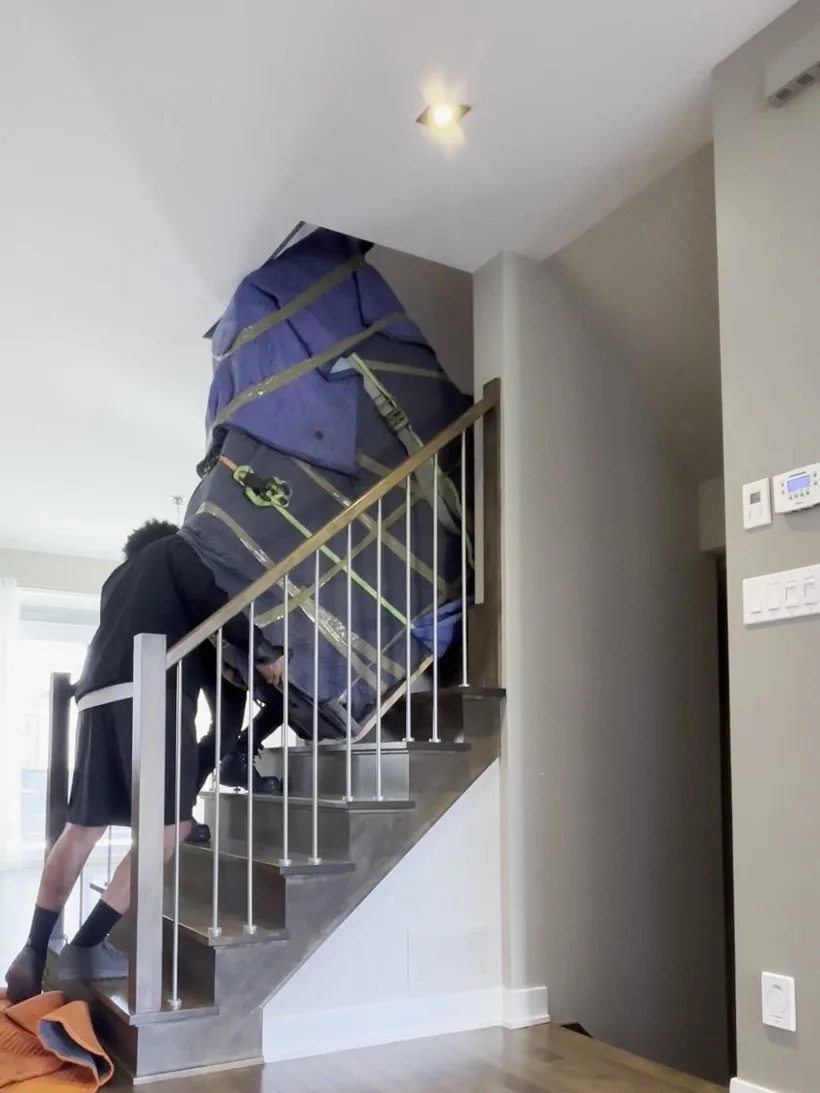
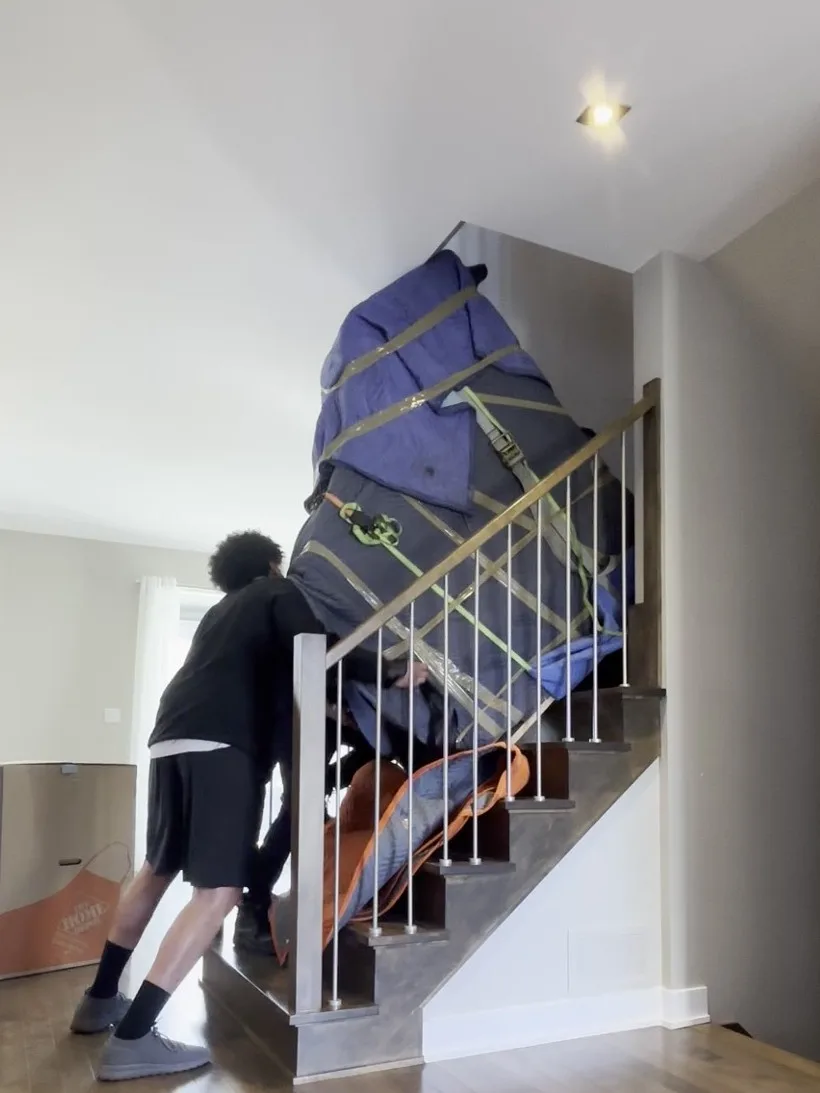
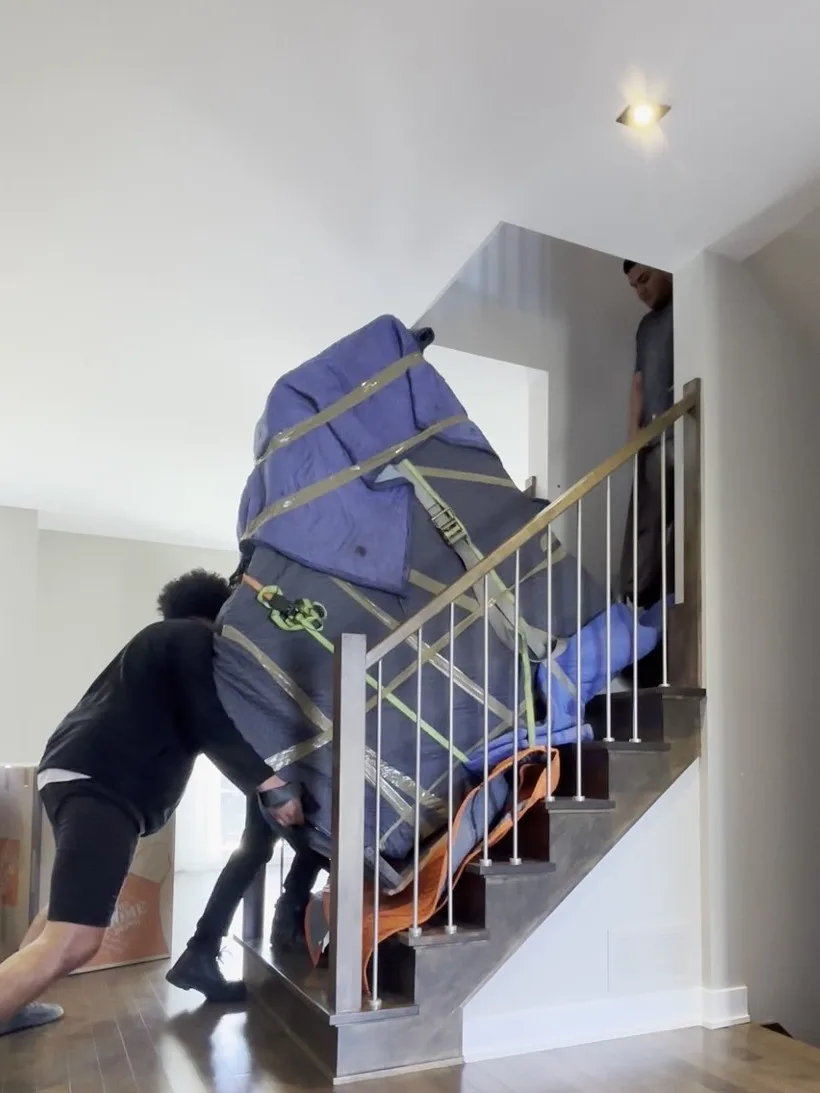



The pool table. A pool table is often assumed to be the hardest part of a move. In experienced hands, it rarely is. Our crew disassembled it into four pieces, after which it moved like any other heavy furniture. CNS's method for pool tables is "Full disassembly, slate-safe transport, and precision reassembly" (pool table moving).
The marble table. CNS's published method for marble and granite tables calls for surface protection, with the slab transported flat (pool table moving).
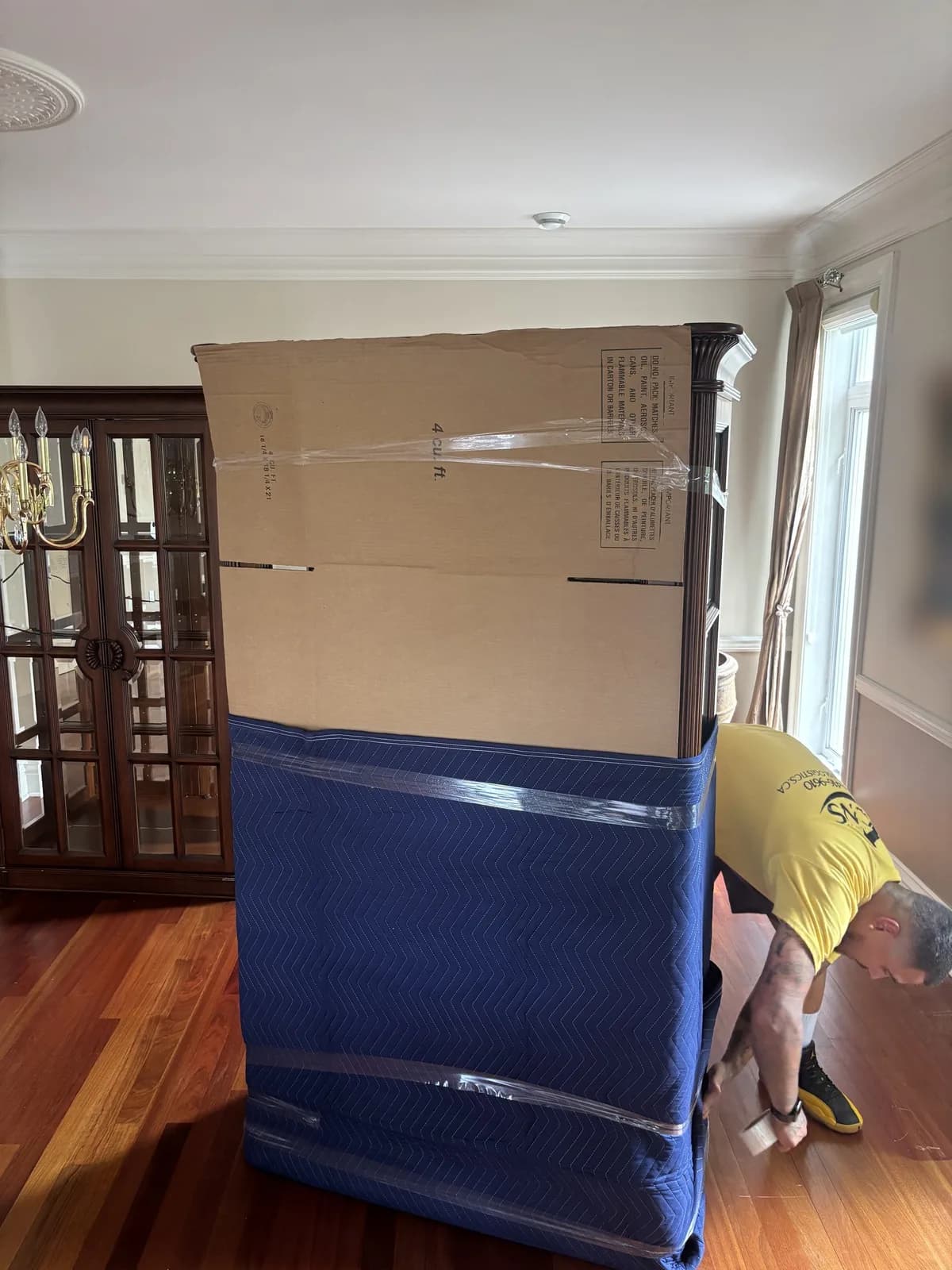
The foosball table and the trampolines were likewise disassembled and reassembled. All of this work took place under the conditions described above: fixed times, police present during loading, and both clients observing. Every piece arrived undamaged.
How did the move end?
The move ended with everything delivered without damage, after six days of work. Packing took about two and a half days and the move itself about two and a half more, and at the request of one household, the crew spent a further full day unpacking. The other household's belongings went into our storage, where they remained for about six months until we delivered them to a new home on the North Shore.
After more than six months of negotiation, four rounds of crew reservations and a decision reopened after it seemed settled, the work itself unfolded as planned, which is the purpose of careful planning. The couple agreed to let us share this account, without their names, so that others facing similar circumstances know that such a move can be done, and done well.


Moving during a separation? What to settle before you book
Before booking, settle in writing with your lawyer the dates, the list of what goes to whom and any conditions on who may be present, then choose a mover prepared to work from that document exactly as written. This is not legal advice; your lawyer determines what your agreement permits. From a mover's perspective, these are the questions that matter:
- Will one party need storage while the other moves in? Raise it early. In this case, one household's belongings remained in storage for about six months before delivery.
- Is the date final for both parties? If either side may still change it, say so when you book. Crews are reserved for specific days; on this job, we reserved crews on four separate occasions.
- Is there a written list of whose items are whose? The crew should never have to decide. The list decides, and anything still in dispute stays in place until it is resolved.
- Are there set times for packing each person's belongings? Tell the mover in advance so the crew can be scheduled around them.
- Is there a court order, or will police or another third party be present? The mover needs to know before moving day, not on it.
- Are there restrictions on trucks or access to the property? A truck length limit, driveway constraints or items outside the house that must not be disturbed all change the plan. On this job, a 22-foot limit meant many more trucks.
- Are there valuable pieces? Art, instruments and antiques should be identified before the move, not discovered on the day.
- Does the new building require a certificate of insurance? On request, CNS issues "a certificate of insurance naming your building" (What We Publish, and Why).
Planning a move governed by an agreement or a court order?
CNS Logistics plans residential moves on the North Shore, on the South Shore, in the West Island and across Montreal, including moves whose conditions are set by two parties and their lawyers. Tell us what has been agreed, and we will plan the move around it. Call 514-416-9610 or request a quote. See also Westmount movers, North Shore movers, piano moving and pool table moving.